SOSA Undercover Stings: Who Watches the Sting?

SOSA is at it again, and so are the cameras.
A team gathers in a house for an undercover operation called The Counting House. Their work becomes a series for viewers. The promise is clear: find people who may harm children.
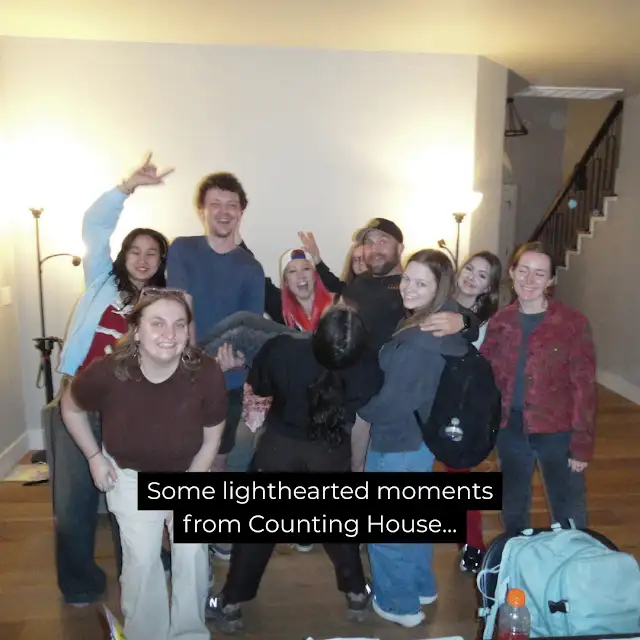 Photo: SOSA Undercover / YouTube. Tap to view SOSA’s original photo post.
This is not the first time the Florida Action Committee has asked questions about SOSA and sting operations. We are returning to those questions because child safety deserves more than a dramatic video and an arrest count.
Children deserve safety, and survivors deserve care. When private groups, police and cameras work together, who sets the rules, who pays, and what happens next?
What is SOSA?
Safe from Online Sex Abuse, or SOSA, is a nonprofit. It says its team creates online profiles that appear to belong to children, talks with adults who contact them, and gathers information for police. These pretend profiles are called decoys.
SOSA says, “We don’t work any cases without law enforcement approval.” It also says filming follows the work rather than driving it. A group working with police should not be treated as the same as a group acting on its own.
Still, an edited episode cannot show every message, decision or court outcome. What viewers do not see can matter just as much as what they do.
Hearing the people doing the work
SOSA founder Roo Powell has said many people on the team are survivors of abuse. She also said the team supports one another and has access to therapy. We could not verify how many decoys specifically are survivors.
In a SOSA video about why she became a decoy, Natalya describes feeling overwhelmed, having trouble sleeping and having old memories return. She also says, “I know I’m protected by all these people, so I feel safe doing this.”
Both parts matter. Being a survivor does not mean someone cannot do this work.
What training is offered? Who reviews the messages? Can someone step away? Is support private and available when it is needed?
SOSA advertises law-enforcement training, and the Justice Department supports training for Internet Crimes Against Children teams. Asking about a particular operation is not proof that training or support is missing. The answers require the actual rules and records.
When fear becomes a story
A Daily Beast interview about Law & Order: SVU explored why viewers find comfort in seeing someone help. That fictional show is not SOSA. But what happens when real investigations also become content?
At the end of a Counting House episode, the team says it hopes arrests and stories can inspire people “to protect the young Alenas around them.” That is a statement of hope, not a measured result.
An arrest is not a conviction. Evidence must be tested, and accused people deserve a fair hearing.
For FAC members and families, this matters. Many know how a label can follow someone long after a case ends. Public fear can make it harder to see the person, the facts and the possibility of change.
Follow the money and the results
SOSA says donations support its work, while membership fees help pay for episodes. That is not proof of wrongdoing. Who pays for an operation and controls the footage?
A Florida funding request sought $750,000 for SOSA-related work. A later proposal listed $350,000, and a later budget offer listed no funding for that item. We have not verified a final award or payment. A request is not the same as money received.
Results matter, too. An Oklahoma sheriff’s office reported a conviction after a SOSA-partnered operation. We have not independently reviewed the judgment. It would be wrong to say the work has produced no results.
But one conviction or a number of arrests cannot answer every question. The Justice Department tracks arrests separately from other outcomes, including newly identified child victims.
Children deserve protection. Survivors deserve care. People doing this work deserve support. People accused of crimes deserve fairness. And families deserve the complete story, not just the most dramatic moments.
Who is watching the people behind the sting, and how do we know the work is making children safer?
Discover more from Florida Action Committee (FAC)
Subscribe to get the latest posts sent to your email.

The problem is, some of the sting operations end in a person getting a longer sentence than someone who actually had a real victim. I can say that from experience because I was amazed that someone a while back on the F.A.C forum told me their sentence for a sting and it was a longer sentence than mine with a real victim.
Yes the intent was there, but if no real person was harmed, not sure how they can justify locking people up for a non-existent victim. My opinion but, yes I agree any sex offense is bad but what offense occurred when there was an imaginary victim? Years in jail or probation for a victim that does not exist, and as a bonus, possibly lifetime registration. More crime, more funding, even if that crime did not really exist except in someone’s made up, set-up sting.
Is anyone concerned how young these people are in the SOSA group? I thought it was the young people that were going to be more aware of the need for compassion and rehabilitation over punishment. Seems to me all of these people in this group could use some therapy. I see this type of stuff as nothing more than a type of sick voyeurism. Led by someone who has a LOT of unresolved issues.