Operation Cooked: Who Teaches the Tactics?
Operation Cooked: Who Teaches the Tactics?
Why I’m looking at Florida’s ICAC training and the cases from Washington
Operation Cooked was announced in Osceola County on October 8, 2026. WFTV reports the sting ran September 2-5. When I see an announcement like this, I want to know what happened before the arrests. Who taught the officers? What were they taught to say, and who checked their work?
Victims of sexual abuse deserve to be heard, protected and helped. They deserve care, counseling and support that lasts. Children deserve safety. I want investigations that protect them and hold up in court. Clear rules and honest answers help everyone.
That is why I looked at ICAC, the Internet Crimes Against Children program. It supports investigations and training, including undercover courses through Fox Valley Technical College. Broward’s 2025-2026 budget reports that Detective Rolando Abreu completed Fox Valley’s Undercover Chat course in May 2025. FDLE has also announced undercover chat training.
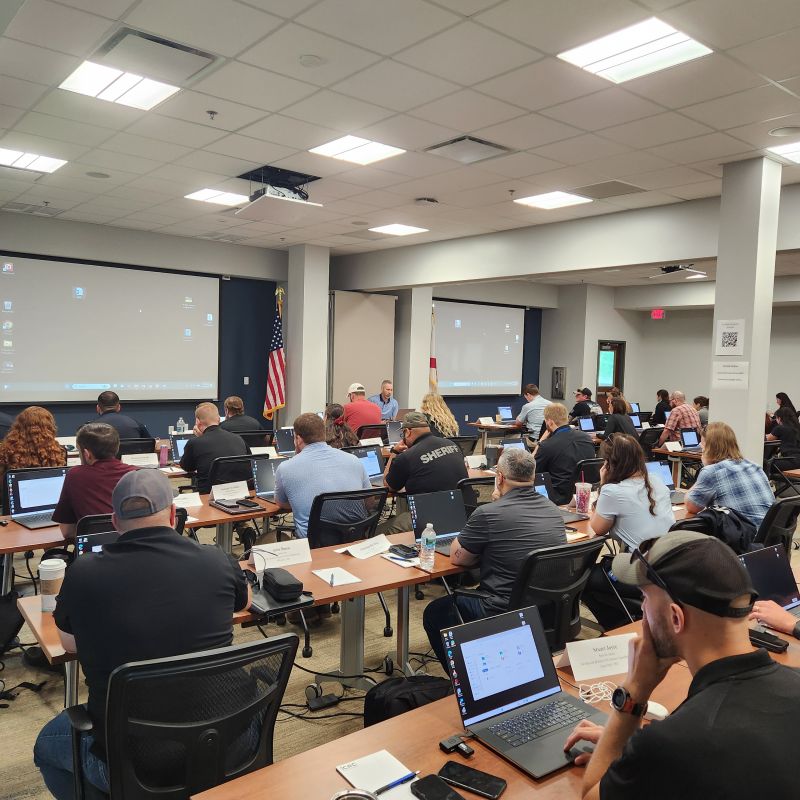 Photo source: Florida Department of Law Enforcement (FDLE), via LinkedIn 8/2026
Osceola is connected too. A North Port city record identifies the Osceola County Sheriff’s Office as the lead agency for Central Florida ICAC, providing partner agencies with funding, standards and training. This education is part of the system behind the arrests.
The tactics deserve attention. A publicly posted 2018 version of national ICAC standards allows online advertisements, messages and certain photographs edited to look younger. Those permissions come with limits. The target should generally set the conversation’s tone, pace and subject matter, unless prosecutors advise otherwise. The standards address entrapment law and consultation with prosecutors. Older course descriptions and Broward policies cover undercover identities, chatting and limits on improper pressure. I want instructors to explain how they teach these limits, how supervisors check complete chats and whether court criticism changes the lessons before the next undercover operation begins.
But having rules does not guarantee that officers follow them. In a 2014 investigation reproduced on FAC’s website, WTSP reported officers approaching adults on dating sites, later introducing a claimed minor and encouraging continued conversations. It reported judges criticizing officers for steering chats toward sexual activity. That is historical reporting about Florida operations, and it gives us specific conduct to examine.
There are documented policy violations elsewhere too. In South Carolina’s 2009 State v. Odom opinion, an officer admitted conducting undercover chats off duty on a personal computer, against ICAC policies. The state’s Supreme Court held those violations did not justify excluding the chats. Breaking a program rule and proving a legal defense are separate questions.
Washington’s State v. Arbogast involved an officer posing as a mother, tying a possible adult sexual relationship to sexual conduct with children. The Washington Supreme Court found enough evidence to require an entrapment instruction and upheld a new trial. In State v. Erlandson, involving a profile initially listing age 39, an altered adult photo and a later claim of being 13, convictions were affirmed. Florida has its own entrapment law.
These sources show that compliance cannot be assumed. They do not establish how often today’s Florida operations depart from the rules. I do not know whether Osceola used Washington’s particular tactics. I have not verified which standards governed Operation Cooked or obtained the full instructor manuals. I want the actual policies, training materials and complete conversations reviewed.
FAC’s John Oliver comment discussion also raises questions about adult dating sites and who leads the conversation. FAC-3 points readers back to WTSP’s reporting and invites a review of public records. Comments can help identify questions worth checking. Individual claims still need records to verify them.
The New York Times examined Net Nanny in “Convicted of Sex Crimes, but With No Victims.” Its link may require a subscription. John Oliver’s police stings episode raised broader concerns, saying stings “might actually be doing more harm than good.” His episode and our FAC YouTube channel are linked here.
An arrest involving a decoy should not automatically be counted as a child rescued. Washington’s public policy study did not establish Net Nanny’s effectiveness. Taxpayers help pay for these investigations and training. They deserve clear answers about costs, methods and results. Lawmakers deserve those answers too when deciding what to fund, improve or change. When courts question tactics, does the training change? Who checks compliance? Victims deserve real help, children deserve protection and the public deserves evidence that this system is doing its job.
Discover more from Florida Action Committee (FAC)
Subscribe to get the latest posts sent to your email.
“Cutting edge” training. Yeah, we all know that’s code for deception, manipulation and encitement pivot strategies! Just a head’s up for the uninitiated – all of these so-called operations are constantly on-going. That means departments no longer wait for Operation “insert silly name here.” They are actively infiltrating all social media platforms DAILY seeking out unsuspecting lonely individuals to go to work on!
The best way to thwart them is to assume anyone that sends a follow request or “add” is a cop. Unless you personally know the person and can verify their username, do NOT add them, much less engage in conversation. Do so at your own peril. Just assume they have infiltrated everything because they have. Especially those Christian dating sites!
It is refreshing to see this concern surfacing and the resultant dialogue. The 2014 exposure article did not gain any traction. My son was a victim of entrapment. He is autistic and Polk County ignored recent legislation of identifying autistic individuals. Chris Hansen was called in all loaded and ready for the take down, staged and video released for profit in coordination with the Sheriff’s department. I brought all concerns to the attention of council at that time. His story was never told, he is in prison and is subject to harm based on the false setup and entrapment for profit theme. I’m glad to see attention being given in this area but from what I’ve experienced the sheriffs departments seemed to be protected and even though the 2014 article was released no action was taken and the reported left the state.
And lawyers and judges have also ignored for decades that the police officers and vigilantes (like Chris Hansen), who conduct these fraudulent sting operations that have nothing to do with trying to protect kids from actual online threats, have been violating state laws when they lure the men online to suggest to them and encourage them to commit the felonies those men are later charged for and convicted of.
Florida Stat. § 777.011 — Principal in the First Degree
“Whoever commits any criminal offense against the state, whether felony or misdemeanor, or aids, abets, counsels, hires, or otherwise procures such offense to be committed, and such offense is committed or is attempted to be committed, is a principal in the first degree and may be charged, convicted, and punished as such, whether he or she is or is not actually or constructively present at the commission of such offense.”
Under this statute, a person who aids, abets, counsels, hires, or otherwise procures the commission of an offense may be charged, convicted, and punished as a principal, even if that person did not personally commit the underlying act. The State would still have to establish the elements required for principal liability, including the requisite participation and criminal intent, and the underlying offense must have been committed or attempted.
Florida Stat. § 777.04(2) — Criminal Solicitation
Florida also separately criminalizes solicitation:
“A person who solicits another to commit an offense prohibited by law and in the course of such solicitation commands, encourages, hires, or requests another person to engage in specific conduct which would constitute such offense or an attempt to commit such offense commits the offense of criminal solicitation, ranked for purposes of sentencing as provided in subsection (4).”
And:
WASHINGTON:
RCW 9A.08.020, “Liability for conduct of another—Complicity.”
subsection (2)(a) provides that a person is legally accountable when:
acting with the culpability sufficient for the crime, he or she causes an innocent or irresponsible person to engage in such conduct.
And subsection (3)(a)(i) says a person is an accomplice when, with knowledge that it will promote or facilitate the crime, the person:
solicits, commands, encourages, or requests the other person to commit it.
Washington therefore expressly addresses the situation where one person causes another person to commit the crime.
It wouldn’t be so if they targeted adults who were actually seeking minors online to exploit – stopping actual crime and harm to real children, instead of wasting tax dollars on creating fake crimes.
Thank you for raising this. There are serious questions about how these operations are conducted, and the full communications deserve scrutiny.
The statutes you cite do not automatically make officers or private sting operators criminally liable. Florida’s principal and solicitation laws require proof of criminal intent and the other elements of the offense. Washington’s law likewise requires the specified knowledge or culpability. The word “encourages,” standing alone, does not settle that question.
Florida law https://www.flsenate.gov/Laws/Statutes/2026/Chapter777/All
Washington law
https://apps.leg.wa.gov/RCW/default.aspx?cite=9A.08.020
There are enforceable limits. In State v. Solomon, Washington’s Court of Appeals upheld dismissal of a child-decoy case because of outrageous government misconduct. That gives us a concrete example of courts examining how police created and pursued an encounter.
Read the decision
https://www.courts.wa.gov/opinions/pdf/762982.pdf
We should also be careful with “fake crimes.” Florida law expressly covers certain conduct involving someone believed to be a child. The absence of an actual child does not automatically defeat those charges. Florida §847.0135
https://www.flsenate.gov/Laws/Statutes/2026/847.0135
The strongest questions are factual: Who introduced the illegal conduct? Did someone try to disengage? What pressure followed? Was a private operator working with police? What do the complete messages show?
Those questions deserve evidence-based answers. We can press for transparency and accountability without presenting an unproven criminal accusation against any individual as an established fact.
Well, you took my tip I gave you and turned it into a full-blown investigation LOL
Well-done and thank you.
I’ve been waiting for the perfect time to share more info about ICAC for those who aren’t familiar yet. It’s definitely been a learning experience for me personally being caught up net nanny style sting, but a huge thank you to everyone for staying vigilant—you guys are the real eyes and ears of FAC! 🛡️🔍 #ICAC #Awareness #Community
George A. Perez, retired assistant director of the Miami-Dade Police Department, commented 8/2026 LinkedIn comment ICAC training linked in article:
“Another great example of the cutting edge training FDLE provides our law enforcement. I am always grateful for the opportunity to work with the great training leadership at FDLE.”
Shows the infrastructure and training